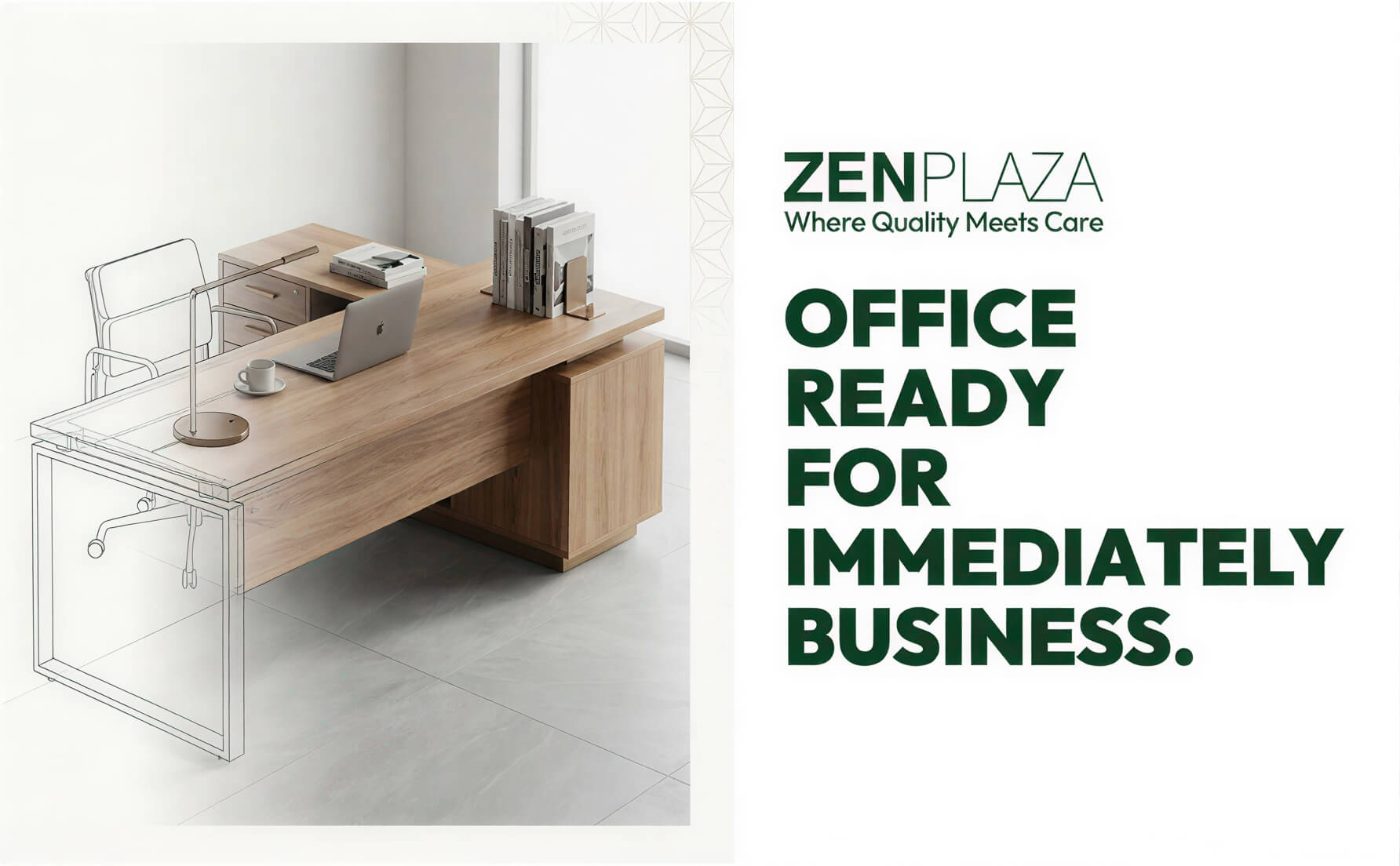
Each office is fitted with interiors from established Japanese brands such as Okamura and Sangetsu.Every detail is selected for durability, comfort, and long-term usability.More than aesthetics, it is a workspace designed for consistent performance over time.Zen Plaza — Ready for Immediate Business. ZEN PLAZAA Member of Nomura Real EstateWhere Quality Meets Care094 979 2070 https://www.linkedin.com/posts/zen-plaza_zen-plaza-japanese-standard-office-120m2-activity-7447813034565062657-skX_?utm_source=share&utm_medium=member_desktop&rcm=ACoAAFGy2PEBbjHxMP1JurkLMZeAcsnIqX8lQbA


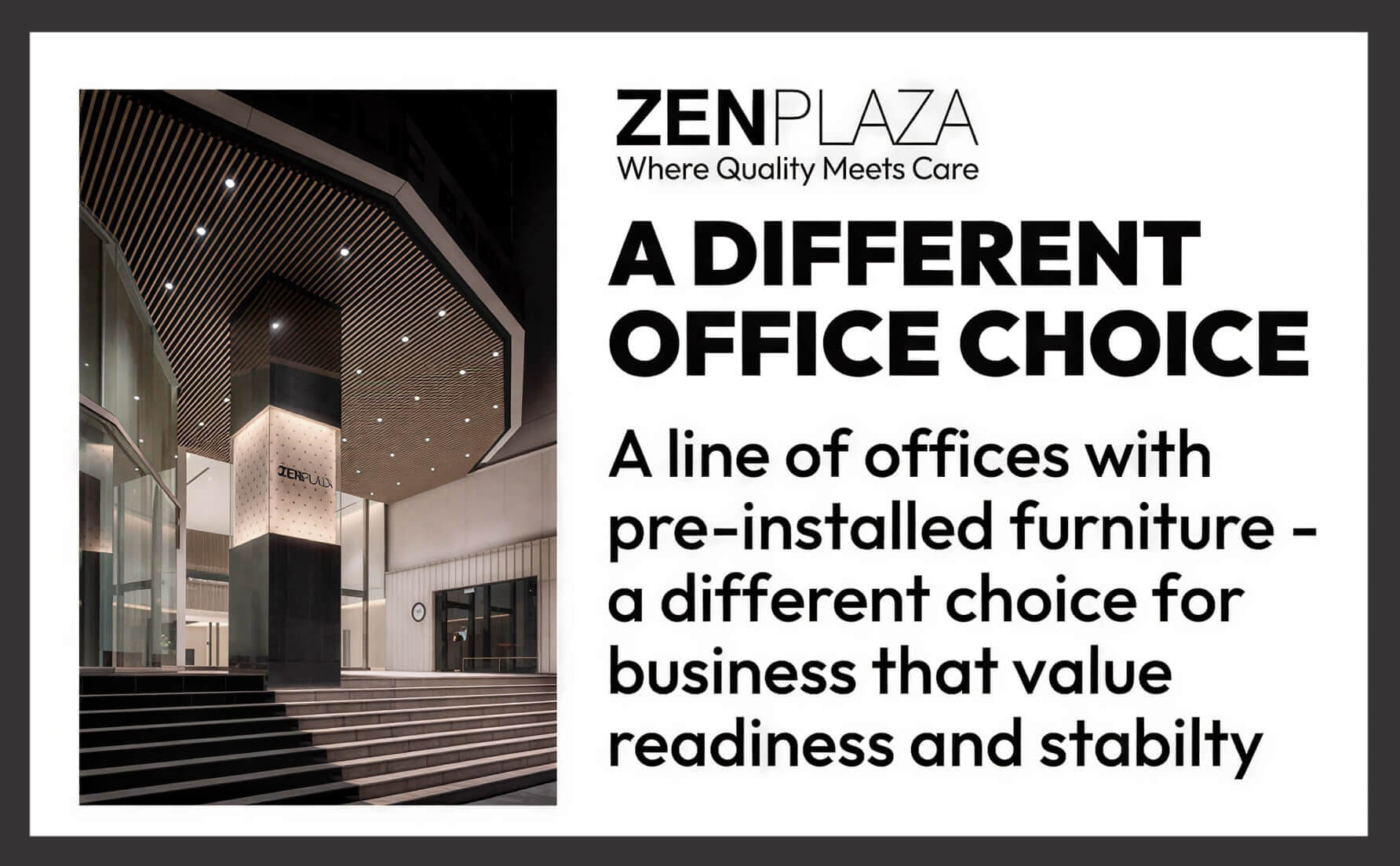
A DIFFERENT KIND OF OFFICE
Zen Plaza introduces, for the first time, a ready-fitted office concept — designed for businesses that value preparation and stability.This is neither coworking nor serviced office.It is a private workspace, fully prepared with carefully selected interiors, ready for immediate operation.Availability is intentionally limited to maintain quality and ensure a well-matched tenant environment.Zen Plaza — Ready
ZEN PLAZA – WHERE QUALITY MEETS CARE
As part of the Nomura Real Estate ecosystem—an esteemed real estate powerhouse established in 1957—Zen Plaza inherits the renowned “Life & Time Developer” philosophy. NRE does not merely construct buildings; it develops spaces that elevate quality of life and optimize time for every individual.In Vietnam, Zen Plaza transforms this philosophy into the vision “Where Quality
CREATING TIME VALUE FROM JAPANESE EXCELLENCE
The “Life & Time Developer” philosophy of the parent group, Nomura Real Estate, goes beyond merely constructing buildings—it is about creating spaces that optimize happiness and time for each customer. Inheriting this strategic mindset, Zen Plaza brings to life the vision “Where Quality Meets Care” through comprehensive modernization renovations during 2024–2025.We believe that an office

ZEN PLAZA – A LEGACY OF STABILITY AND PROSPERITY
For over 25 years, Zen Plaza has stood as a timeless landmark in the heart of District 1, Ho Chi Minh City. Constructed by Shimizu Corporation in 1999, the building remains a testament to structural excellence and the enduring quality of Japanese-style service over the decades.Zen Plaza’s value is further solidified as a strategic component