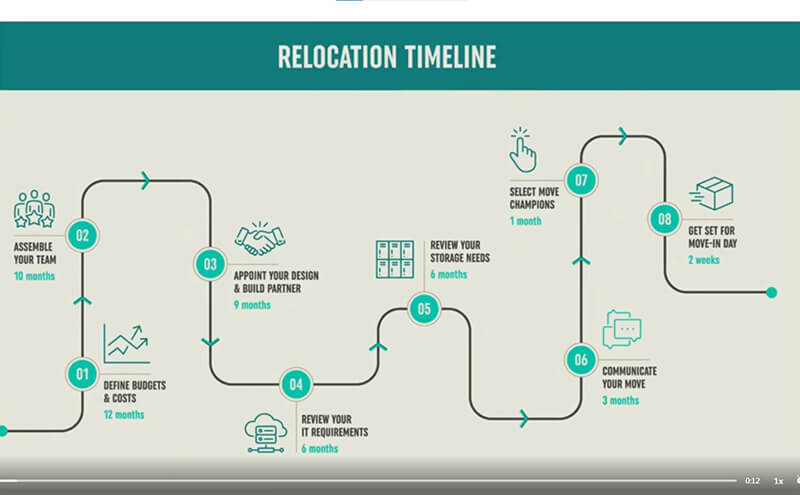
A well-structured office relocation timeline in today’s market usually includes six key phases:Needs assessment (2–3 weeks)Search & shortlisting (3–6 weeks)Lease negotiation (2–4 weeks)Design & layout approval (2–4 weeks)Fit-out & technical installation (4–8 weeks)Move-in & operational stabilization (1–2 weeks)In Vietnam, delays often happen during the design approval or technical coordination stages — typically due to internal


WHY IS THE OFFICE RELOCATION TIMELINE MORE IMPORTANT THAN EVER?
In 2025, Ho Chi Minh City’s office market is seeing companies begin their search much earlier than before. Despite new supply entering the market, suitable spaces are not always available at the right time. Many tenants now plan 6–12 months ahead — making relocation timelines more critical than ever.A strong timeline starts with three anchor
OFFICE RELOCATION – FINAL TAKEAWAYS & ACTION PLAN
In summary: relocating an office is much more than finding empty space — it’s a comprehensive budgeting exercise: rent, setup, operations, and potential unforeseen costs. With the 2025 HCMC market context — rising rents, growing supply, but tenants still cost-conscious about setup — careful preparation gives you a significant edge.Your strategy should be: build a
OFFICE RELOCATION – DEEP DIVE INTO EXPENSES
When a company decides to relocate, there are 5 major cost groups to plan carefully: (1) Rent and deposit; (2) Moving furniture and equipment; (3) Interior design & renovation; (4) Technical infrastructure setup (electricity, Internet, security, etc.); (5) Initial operating expenses — HVAC, cleaning, maintenance, etc. Plus potential productivity loss or downtime.In the HCMC 2025

OFFICE RELOCATION – SETTING THE STAGE
In 2025, the office leasing market in Ho Chi Minh City is seeing a noticeable uptick: Grade-A rents now average around USD 60–61 per sqm/month, marking the highest level in five years. Although new supply continues to enter the market, demand remains strong — especially from tech, finance, and banking companies.Against this backdrop, preparing a